KDP Interior Border and Edge Pages
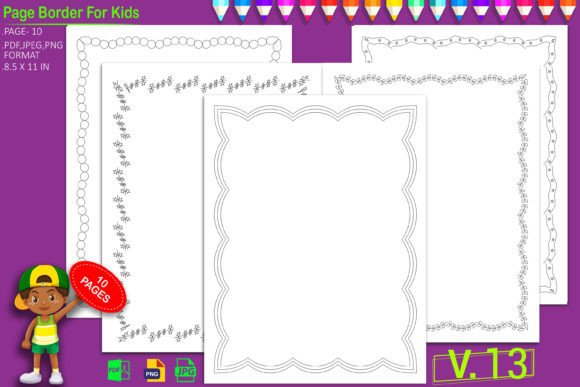
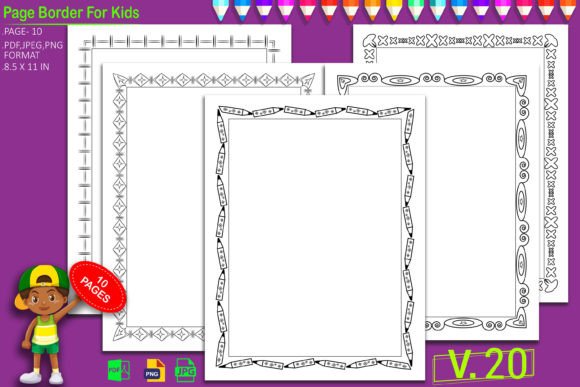
Well-designed interior borders and edge pages do more than frame content—they shape how readers engage with it. Kdp Interior Border and Edge Pages is a purpose-built resource for creators who value clarity, consistency, and quiet sophistication in printed and digital materials. It’s not about flashy decoration; it’s about intentional structure that supports readability, reinforces brand tone, and quietly elevates the user experience.
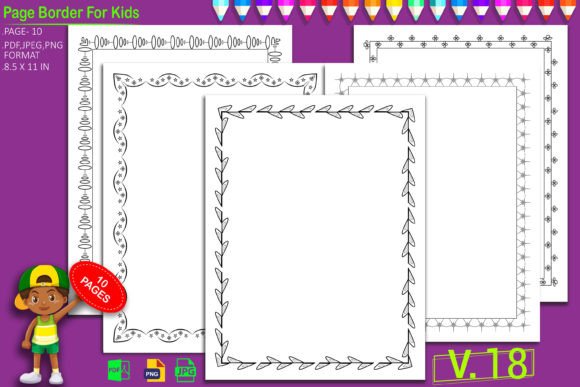
This collection includes 10 thoughtfully crafted pages—each sized to standard 8.5 × 11 inches, optimized for KDP (Kindle Direct Publishing) interior use, with no bleed required. Every page is delivered in three formats: PDF (print-ready), high-resolution JPG, and transparent-background PNG. The black-and-white palette ensures crisp reproduction on any printer, compatibility with KDP’s print guidelines, and flexibility across both monochrome and full-color projects.
Why These Borders Work Where Others Don’t
Many border sets sacrifice function for ornamentation—crowded lines, inconsistent spacing, or overly ornate motifs that compete with text. Kdp Interior Border and Edge Pages avoids that trap. Each design prioritizes negative space, balanced weight distribution, and subtle rhythm. The result? A clean visual boundary that guides the eye—not distracts from it.
Because they’re built at exact KDP interior dimensions, these pages integrate seamlessly into manuscripts without resizing, cropping, or alignment guesswork. That saves time during layout—and eliminates common formatting errors that delay publishing or trigger KDP rejections.
Creative Applications Across Real-World Projects
These borders aren’t limited to book interiors. Their versatility makes them valuable across multiple creative workflows:
- Educators and curriculum designers use them as printable worksheet frames—adding polish to math drills, vocabulary builders, or journal prompts without overwhelming young learners.
- Bloggers and content marketers convert individual border pages into branded social media graphics (e.g., quote cards, tip sheets, or newsletter lead magnets), leveraging the PNG transparency for clean overlays on photos or backgrounds.
- Small business owners adapt them for service brochures, client handouts, or workshop workbooks—maintaining visual cohesion across touchpoints without hiring a designer for every update.
- Children’s activity creators rely on the “Border and Edge For Kids” variation for coloring pages, tracing guides, or story-starters—where gentle, open-lined borders invite interaction rather than impose rigidity.
One educator recently used four of the designs to create a differentiated reading log: one border for reflection questions, another for vocabulary tracking, a third for sketching scenes, and a fourth for peer feedback. Because all share the same underlying scale and line weight, students recognized the format instantly—even as the purpose shifted.
Designing With Intention—Not Just Decoration
When integrating Kdp Interior Border and Edge Pages, start by asking: *What role does this page play?* A title page needs presence—but not dominance. A chapter opener benefits from quiet anticipation. A practice worksheet requires clear boundaries for focus, not visual noise.
Here’s how to keep results effective and audience-friendly:
- Match border weight to content density. Lighter linework suits text-heavy pages; slightly bolder frames work better for image-led layouts or younger audiences.
- Use consistent placement. If you apply borders only to chapter starts, don’t add them to mid-chapter exercises—consistency builds intuitive navigation.
- Test legibility early. Print a sample page with actual body text. Does the border recede—or draw attention away from the words?
- Leverage the PNG files for layered design. Drop a border over a soft gradient or textured background to add depth without sacrificing clarity.
Practical Tips for Educators and Teaching Product Creators
If you develop teaching resources—whether printable PDFs, classroom posters, or supplemental kits—these borders help unify your product line. Use the same corner motif across flashcards, exit tickets, and anchor charts. That small visual thread tells users, “This belongs to the same system,” building trust and reducing cognitive load.
For “Border and Edge For Kids,” consider pairing each design with a specific learning intention: rounded corners for collaborative tasks, geometric frames for logic-based activities, organic shapes for creative writing. You’re not just decorating—you’re signaling purpose.
And because all files are black-and-white, there’s no risk of color mismatch between screen and print, no extra ink costs for schools or home users, and full accessibility compliance for high-contrast modes.
Refinement Starts With Restraint
Professionalism in design isn’t measured by complexity—it’s revealed in editing. A single well-placed border can do more than three competing elements. Kdp Interior Border and Edge Pages reflects that principle: each of the 10 pages offers distinct character while honoring shared constraints—same size, same color mode, same functional priority.
That restraint gives you room to innovate elsewhere: stronger typography, clearer hierarchy, more intentional whitespace. Let the border support the message—not carry it.
If you’re building a series—say, a set of themed workbooks for elementary math—you can assign one border per grade level or concept (e.g., symmetry-themed frames for geometry units, rhythmic patterns for skip-counting). The consistency becomes part of your brand language. And because the files are delivered in multiple formats, switching between print, web, and presentation use takes seconds—not hours.
No special software is needed. Open the PDF in Acrobat or Preview to copy-paste into InDesign or Canva. Drag the PNG into Google Slides for instant worksheet templates. Import the JPG into your blog CMS as a featured image background. The flexibility is built-in—not added on.
If you need guidance adapting a specific border for your project—or want recommendations based on your audience, platform, or output goal—you’re welcome to reach out. Real support matters, especially when time is tight and standards are high.
Follow for updates on new border themes, seasonal variations, and practical layout tips—all grounded in what actually works in classrooms, studios, and small business workflows. Thank you for creating with care, clarity, and purpose.