100 Days Teaching Planner KDP Interior: A Practical Evaluation for Print-on-Demand Publishers
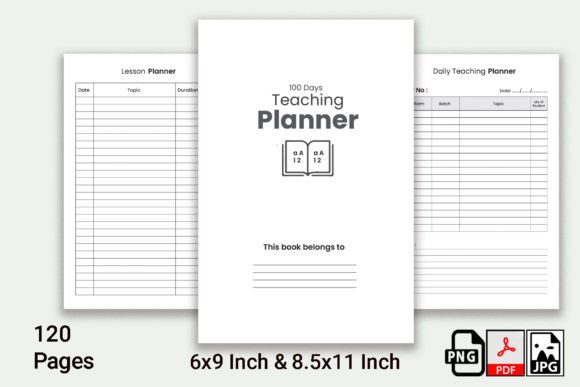
The 100 Days Teaching Planner KDP Interior is a ready-to-upload, vector-based PDF template designed specifically for Amazon KDP creators building low-content teaching resources. Unlike generic planners or journals, it targets educators, tutors, and curriculum designers who need structured, repeatable layouts—without requiring custom design work or technical publishing expertise. Its core value lies in its tested compatibility, flexibility, and production readiness—not novelty or feature overload.
What Sets This Interior Apart From Other Teaching Planners?
Most teaching-themed low-content interiors fall into two categories: highly specialized (e.g., subject-specific lesson logs) or overly broad (e.g., “teacher journal” with vague prompts). The 100 Days Teaching Planner KDP Interior occupies a deliberate middle ground. It offers 100 consecutive daily planning pages—each with consistent spacing, clear date fields, objective lines, reflection prompts, and space for notes—but avoids prescriptive pedagogy. That makes it adaptable across grade levels, teaching contexts (in-person, hybrid, tutoring), and instructional frameworks (backward design, inquiry-based learning, SEL integration).
Its vector format—fully editable in Adobe Illustrator—is uncommon among KDP interiors. Most low-content templates ship as flattened PDFs or raster images, limiting resizing without quality loss. Because this one uses scalable vectors, you can adjust page dimensions (6×9″ or 8.5×11″) without pixelation, reflow margins for bleed-free printing, or modify fonts and layout elements to match your brand. That flexibility matters if you plan to create variants—like a “100 Days STEM Teaching Planner” or bilingual editions—without starting from scratch.
How It Compares With Alternative Approaches
Creators evaluating the 100 Days Teaching Planner KDP Interior often weigh it against three alternatives:
- Custom-designed interiors: Building from scratch gives full control but demands design skill, time investment (often 20–40+ hours per interior), and rigorous KDP validation. You’ll need to test trim sizes, gutter margins, font embedding, and color profiles manually. The 100 Days Teaching Planner KDP Interior eliminates that overhead—it’s pre-tested on KDP with no upload errors reported—and includes both high-resolution JPG and PNG exports for marketing visuals.
- Generic planner templates: Many free or low-cost planner files lack teaching-specific logic. They may include habit trackers or mood logs instead of lesson alignment fields or student progress columns. While usable, they require editing to serve an educator audience meaningfully—and risk feeling inauthentic to buyers. This interior was built with classroom workflow in mind: each page supports planning, execution, and reflection in one glance.
- Subscription-based design tools: Platforms like Canva or Planning Pod offer drag-and-drop customization but rarely deliver print-ready, KDP-compliant PDFs with embedded fonts and CMYK-safe colors. Exporting from such tools often introduces margin shifts, font substitution, or resolution mismatches. The 100 Days Teaching Planner KDP Interior delivers a single, production-locked PDF—plus layered Illustrator files—so what you see is what prints.
Realistic Strengths—and Where It Has Limits
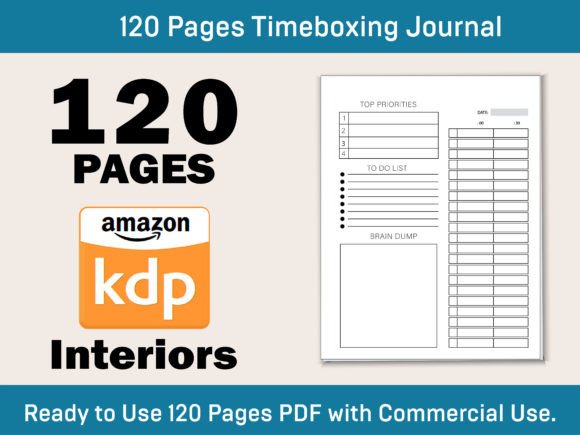
Strengths are most visible in execution speed and reliability. If your goal is to launch multiple teaching-themed titles quickly—say, a series covering “100 Days of Math Practice,” “100 Days of Reading Response,” or “100 Days of Behavior Tracking”—this interior serves as a stable, reusable foundation. Its 120-page count (100 planning days + cover, intro, and resource pages) fits standard KDP paperback pricing tiers. The “no bleed” setup means no extra trimming calculations; the 300 DPI JPG and PNG assets simplify Amazon A+ content creation.
However, it isn’t a one-size-fits-all solution. It doesn’t include interactive elements (e.g., QR codes linking to digital resources), editable text fields for end users (like fillable PDFs), or curriculum-aligned standards checklists (e.g., CCSS or NGSS tags). Those features would require additional development—and potentially complicate KDP compliance. Likewise, while the designs are original and high-quality, they prioritize clarity over decorative flair. If your audience responds strongly to illustrated themes (e.g., watercolor apples, chalkboard textures), you’d need to layer those in yourself using the vector files.
When This Interior Fits—and When It Doesn’t
The 100 Days Teaching Planner KDP Interior works best when your strategy emphasizes volume, consistency, and audience specificity. For example:
- You’re launching a niche sub-brand focused on teacher professional development and want cohesive interiors across 5–10 titles.
- You’ve validated demand for “100-day” structures (e.g., via Amazon search data or Pinterest trends) and need a reliable interior to test messaging variations.
- Your design capacity is limited—you’re a solo creator handling writing, formatting, and marketing—and you need predictable, error-free uploads.
It’s less ideal if you’re pursuing differentiation through interactivity, multimedia integration, or deep pedagogical scaffolding. Suppose your goal is to build a premium-priced planner with embedded video tutorials, printable manipulatives, or adaptive assessment rubrics. In that case, a static 100-page PDF—even a well-executed one—won’t meet those functional requirements. Similarly, if you’re targeting early-career teachers who prefer guided prompts over open-ended reflection, you might need to augment the interior with supplemental worksheets or onboarding guides.
Practical Considerations Before You Use It
Because it’s delivered as a vector PDF and Illustrator file, basic familiarity with Adobe software helps—but isn’t mandatory. You can make simple changes (e.g., swapping a font, adjusting line height, recoloring headers) using Illustrator’s Type and Appearance panels. More complex edits—like adding new sections or reordering page elements—require comfort with layers, clipping masks, and artboard management.
Also note: while the file is “print ready,” always generate a physical proof copy before scaling to bulk orders. KDP’s paper stock affects contrast and ink spread—especially with fine lines or light grays. Test how your chosen cover design aligns with the interior’s first page, and verify that all text remains legible at 10-point size on cream or white paper.
Making an Informed Choice
Choosing the 100 Days Teaching Planner KDP Interior isn’t about finding the “best” teaching planner—it’s about selecting the most appropriate tool for your current goals, constraints, and growth stage. It excels where speed, reliability, and scalability matter more than bespoke functionality. It supports creators who understand that success in low-content publishing often comes not from out-designing competitors, but from out-executing them: launching faster, iterating smarter, and serving a specific audience with consistent, usable tools.
If you already have a clear teaching niche, verified search volume for “100 days” phrasing, and need a production-ready interior that won’t stall your upload timeline—the 100 Days Teaching Planner KDP Interior is a pragmatic choice. If your priority is deep customization, interactivity, or pedagogical innovation, allocate time and budget toward custom development instead. Either way, grounding your decision in real use cases—not just template features—leads to more sustainable, audience-aligned results.